How it all began: the idea behind the experiment
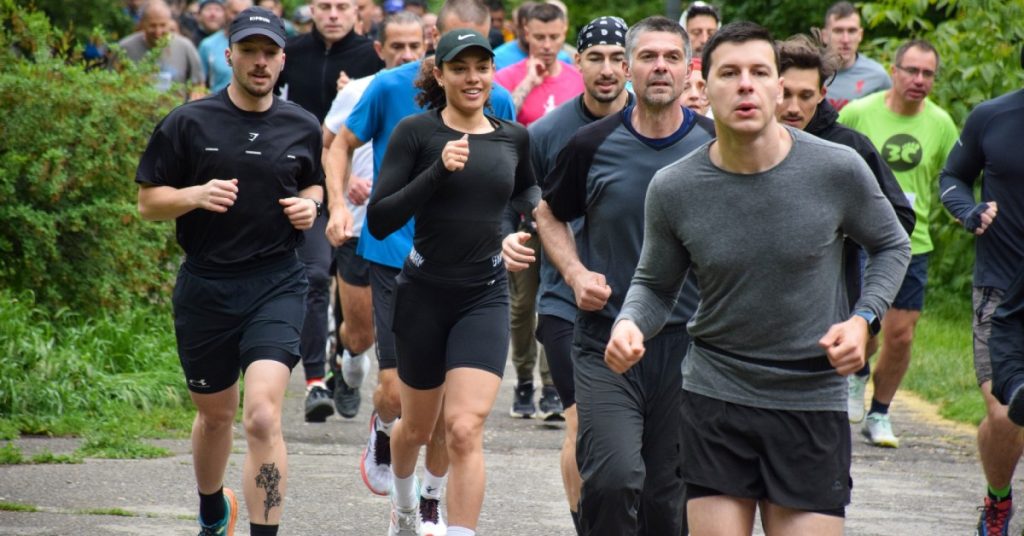
In 2024, a group of runners took part in an experimental study of resilience and aerobic endurance, which are known to be key components of sporting performance in middle- and long-distance runners.
The aim of the study was to assess the effect of HAYDE by ABOPharma on sporting endurance and recovery during an intensive training programme.
The project began with a clear aim: to test HAYDE in a real-world setting and monitor its effect in actively training runners, following a scientific protocol with a double-blind design, a placebo group, an identical programme and regular questionnaire-based feedback throughout an eight-week structured training programme.
Sixteen people took part in the study, all with previous running experience, placing them in the intermediate category. A further group of four elite athletes competing at national and international level also participated.
First, however, let us answer the question:
What is HAYDE, and why is it aimed at runners?
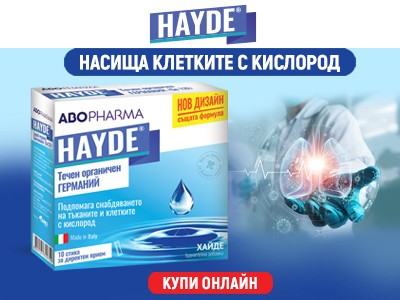
Few would disagree that oxygen is our greatest ally when we exercise. This is because glucose and oxygen are used to produce ATP (adenosine triphosphate), the molecule that stores and transports energy in cells. HAYDE by ABOPHARMA is the only product on the market containing liquid organic germanium derived from reishi mushroom (Ganoderma lucidum) and an extract from the mushroom’s spore-bearing part. It supplies oxygen to cells and tissues through a mechanism independent of haemoglobin: one organic germanium molecule can carry three oxygen atoms, thereby supporting oxygen delivery to cells and tissues. This oxygen-supply pathway is independent of the principal pathway, in which oxygen bound to haemoglobin is delivered to cells and tissues through the blood.
What happens to a runner’s body when HAYDE is added to the equation?
Also known as the ‘miracle’ mineral, liquid organic germanium acts at cellular level by increasing cellular metabolism and improving cells’ ability to generate energy by supplying them with oxygen. The more oxygen the cells receive, the more energy is delivered to all the body’s organs and systems. Owing to its powerful antioxidant effect, combined with the additional oxygenation of cells and tissues, HAYDE is suitable for supporting rapid recovery after intensive sports training.
In practice, this means that the additional oxygenation that HAYDE provides to the body gives every runner the energy, endurance and improved recovery needed to push their limits.
The product comes in convenient sticks for direct consumption, ensuring rapid absorption. For maximum effect, specialists recommend taking HAYDE over an extended period – in the morning, 30 minutes before food.
But how true is all of this? In this article, we explore the results through the power of the scientific approach. With special support from 5km Run, ABOPharma organised a RUNNER FOLLOW-UP PROJECT that challenged participants to run with HAYDE for eight weeks in pursuit of improved sporting performance.
This follow-up study harnessed the power of the scientific approach to measure objective and subjective factors during a journey towards better sporting performance with HAYDE.
Selecting and preparing the participants
Sixteen participants were selected and divided into two groups – HAYDE and placebo. Neither the participants nor the organisers knew who was taking which product (a double-blind study), ensuring that expectations or bias could not influence the results. Participants were randomly assigned to the HAYDE or placebo group without knowing which group they belonged to, eliminating psychological influence on the findings.
All 16 participants had previous running experience and established training habits. They were familiar with physical exertion and had already progressed beyond the beginner stage. After selection, each completed a 5 km test to establish a baseline. Everyone then followed the same training programme, meaning that the only variable between the two groups was the supplement – either HAYDE or placebo.
One programme – two measurements
The programme was designed by Kalin Stoyanov, a personal and group trainer with 15 years’ experience who helps people entering sport to enjoy it and make it part of their lives. He has also worked with national teams. Since 2018, he has been a coach and captain in the local adidas Runners Sofia community, where he takes an active role in organising events and training programmes for runners of different abilities. His professional career also includes working as a physiotherapist at N. I. Pirogov University Emergency Hospital since January 2024.
The training plan prepared by Kalin covers eight weeks and focuses on progressive loading and heart-rate-zone training. As Kalin himself notes: ‘Good results come slowly and through consistency, while rushing training often leads to injury.’
His programme includes a variety of workloads: tempo runs, long slow runs and interval sessions. At the end, the participants completed another 5 km test under conditions as close as possible to those of the first test, ensuring that the results were comparable. Progress before and after the programme was then compared both individually and by group.
The 5 km times were recorded in seconds, and improvements were calculated by comparing the results of Test 1 and Test 2. Consistency was measured using the standard deviation of the times in each group. Participants did not alter other factors such as diet, rest or additional training regimes.
One further important point concerns how the results were recorded:
Before the programme began, participants completed a questionnaire, which recorded current motivation levels, running frequency, the effect of recovery habits and participants’ subjective assessment of exertion. The same questionnaire was used at the end of the period to track changes.
Participant feedback
After completing the training cycle, participants in the HAYDE group reported through their questionnaires that they experienced faster recovery after tempo and interval sessions, less frequent feelings of heaviness in the legs, greater energy and endurance, and more stable heart rates under equivalent workloads.
Participants in the placebo group also reported improvement, but this was mainly associated with a sense of progress and the effect of the structured training process.
How were the results measured, and what do the figures show?
Cohen’s effect size (Cohen’s d) was used to report the results. This statistical measure assesses the magnitude of an effect – the effectiveness of an intervention or the difference between groups – and helps determine how meaningful the difference between two groups or conditions is.
Cohen’s effect size (Cohen’s d) for improvement between the HAYDE and placebo groups showed a significant improvement in favour of the HAYDE group.
● Average improvement in the placebo group (placebo effect): 89.6 seconds
● Average improvement in the HAYDE group: 111.1 seconds
The average difference between the groups was 21.5 seconds
Results in percentages:
● 75% of those taking HAYDE reported an increased sense of recovery (ratings of 2 and 3 on a three-point scale)
● 62.5% said they attributed the improvement in their performance to the effect of HAYDE
● 50% reported increased energy and endurance in week 6.
A real-world example: Miroslav Spasov
One participant, Miroslav Spasov, a runner with 12 years’ experience, completed 5 km in 15 minutes and 18 seconds, a significant improvement of 25 seconds during the study.
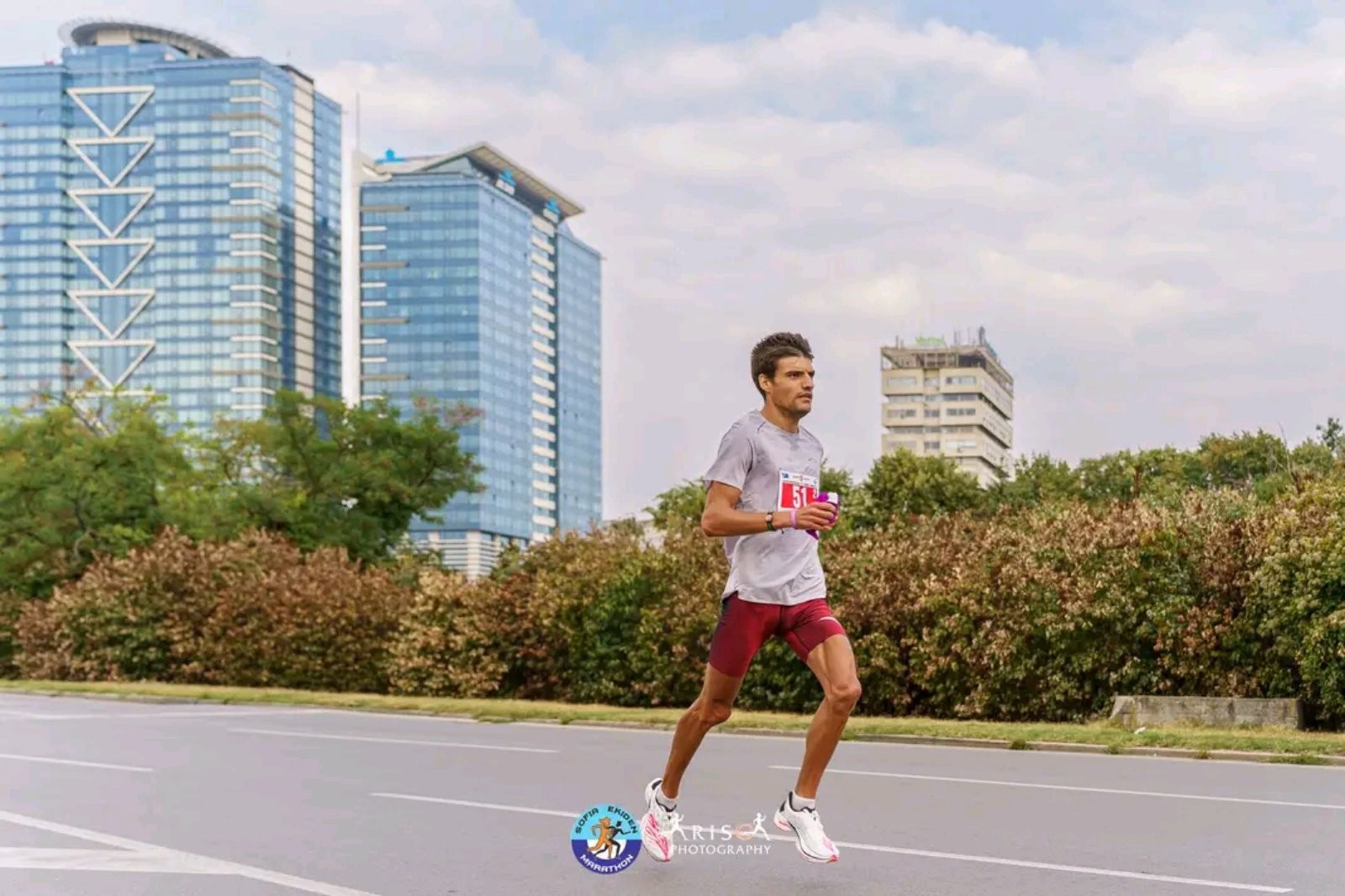
Photo: Krisok Photography
For those unfamiliar with Miroslav Spasov, he is one of Bulgaria’s leading long-distance runners and a member of Team ANTA. His best long-distance road-running achievements include the Hague Half Marathon, which he finished in 68 minutes 10 seconds, and the 50 km European Championship in Spain, which he completed in 3:07:20.
In 2024, he received two awards at the running community’s annual awards: ‘Road Runner of the Year’ and ‘Breakthrough’.
Miroslav’s most remarkable achievement, however, marked his sporting career at the Berlin Marathon in September 2024. Miroslav says of the event:
– ‘The Berlin Marathon was an incredible experience for me. Besides being one of the world’s biggest marathons, the 2024 edition was also the largest, with more participants than any previous marathon. The organisation was excellent, the competition fierce and the course truly unique. I achieved my best result to date across all the distances I have run.’
At the Berlin Marathon, Miroslav achieved an impressive result, finishing 70th among the men in 2:20:19. He improved his personal best from Rotterdam in 2023 by more than six minutes and recorded the best Bulgarian marathon time in the past ten years.
He attributes this remarkable result, which places him among Bulgaria’s best marathon runners, not only to his own sound preparation, persistence and discipline, but also to taking HAYDE, which helped him meet the challenge exceptionally well.
Miroslav and his fellow runners who also took part in the follow-up reported that, in addition to better running results, HAYDE was associated with markedly improved heart rate during slower and even intensive runs, as well as a feeling of easier breathing.
After joining the follow-up project, Miroslav reported that he felt greater endurance and a surge of energy after just the second week of taking HAYDE, with the greatest progress appearing after four weeks of daily use.
After the programme ended, he continued using the product because he could see a clear, tangible effect on his recovery and motivation to run.
In conclusion, the structured programme led to a significant improvement in 5 km running performance among all participants. The HAYDE group, however, showed a substantially higher rate of improvement, greater consistency in the results and faster recovery according to their subjective assessment.
The product does not simply support effort; it channels it in the right direction – towards confidence, pace, recovery and a tangible result. HAYDE does not replace effort, but supports and facilitates the outcome. Combined with systematic preparation, it turns effort into an investment with a consistent return.
If you also train hard, are striving for a new personal best and are looking for an advantage you can feel from the second week, HAYDE may be the ally that helps you make the difference.
HAYDE is the extra impetus that turns effort into progress. The participants felt it. Now it is your turn.